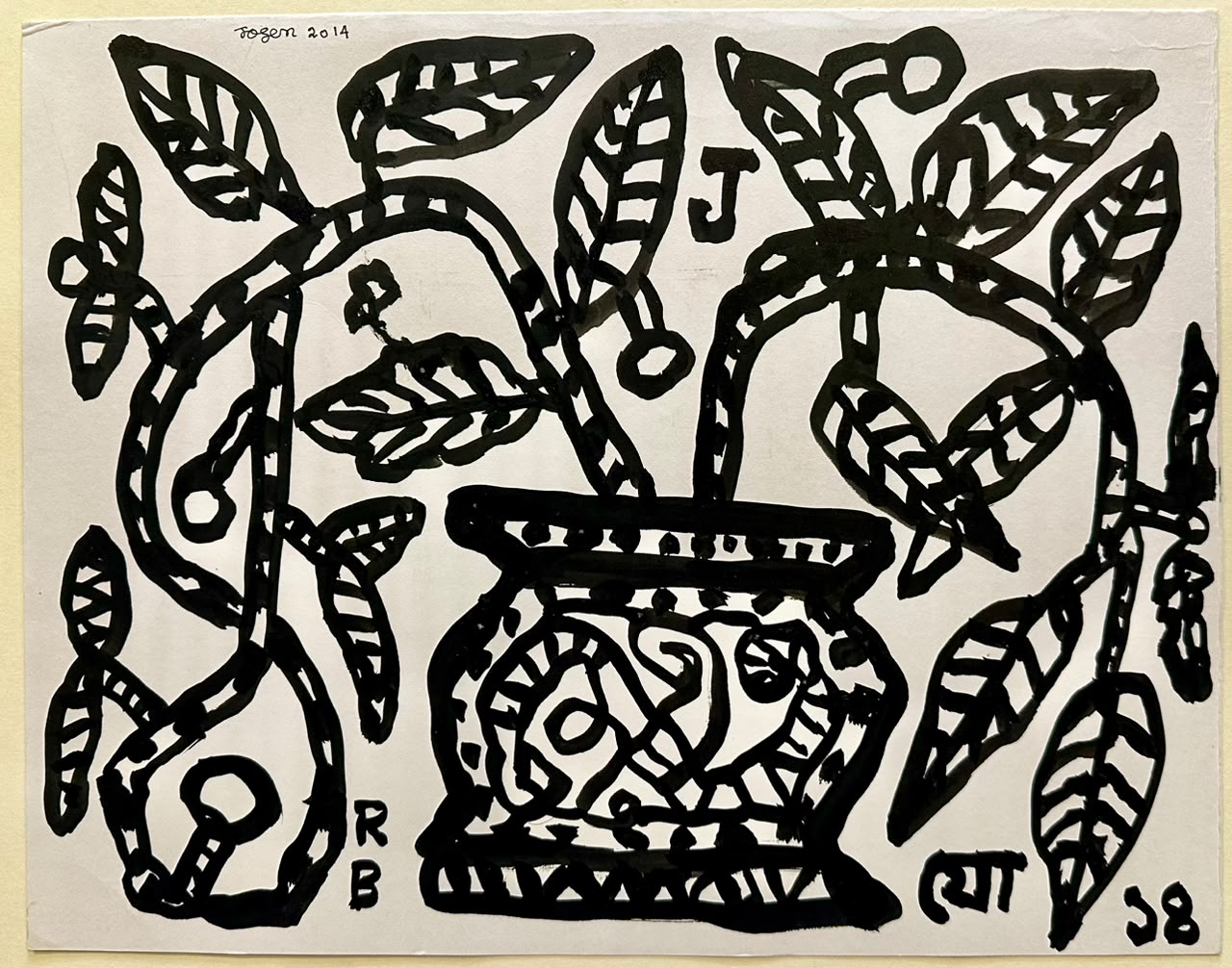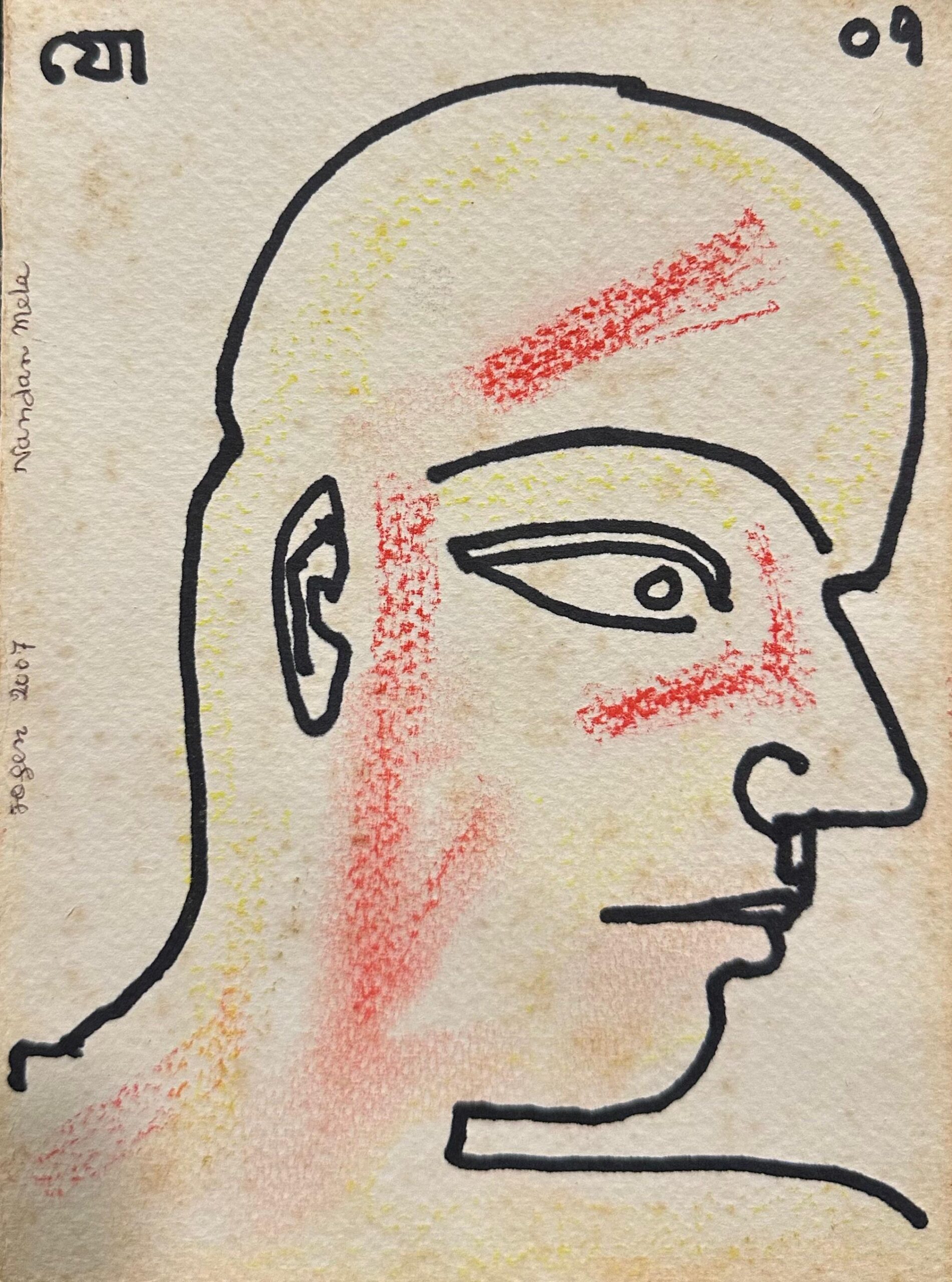
Jogen Chowdhury (born 1939) is one of the most eminent masters of 21st-century modern Indian art, universally celebrated as the “master of the unbroken line”.
His distinctive visual style is anchored in a unique figurative expressionism where continuous, sinuous linework, dense cross-hatching, and subtle dry-brush textures create a sense of deep psychological and emotional tension. Influenced heavily by the childhood trauma of his family’s post-partition migration from East Bengal to Kolkata, his art rejects traditional concepts of ideal beauty. Instead, it delves into the vulnerability and decay of the human condition. Working primarily with black ink, watercolour, and pastel, Chowdhury presents distorted, voluptuous, or flaccid human forms isolated within flat, dark dream-spaces. His paintings frequently explore complex themes, including the friction in human relationships, socio-political observation, the intimacy of the female form, and the weariness of everyday life.
By marrying a highly localized Bengal ethos with international modernist ideas developed during his formative years in Paris, Chowdhury’s introspective compositions stand out for their profound ability to turn the human body into a textured landscape of raw emotion and life experience